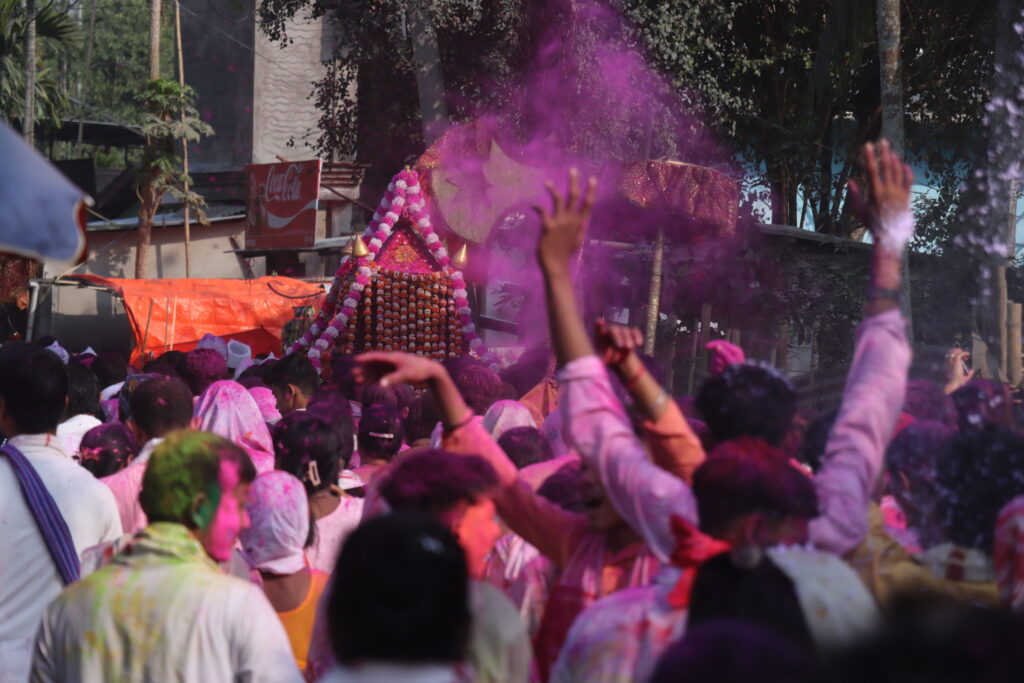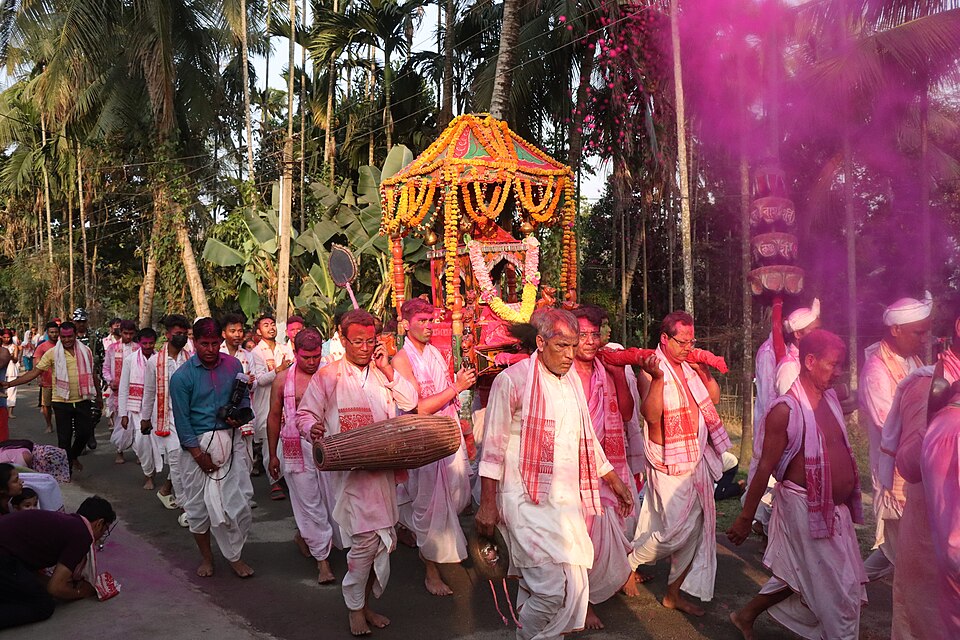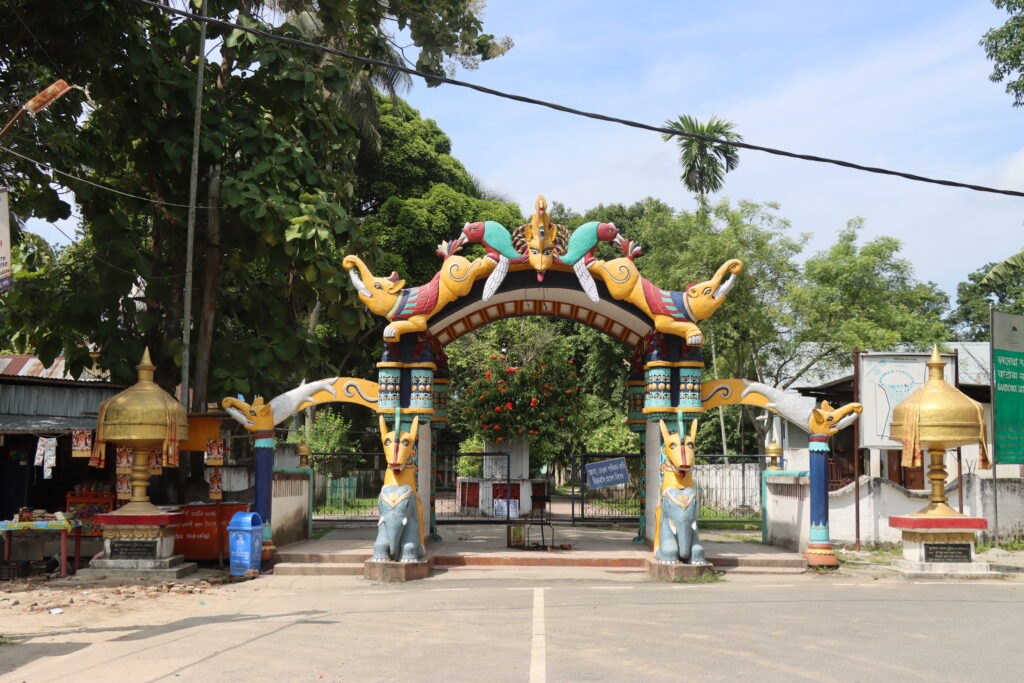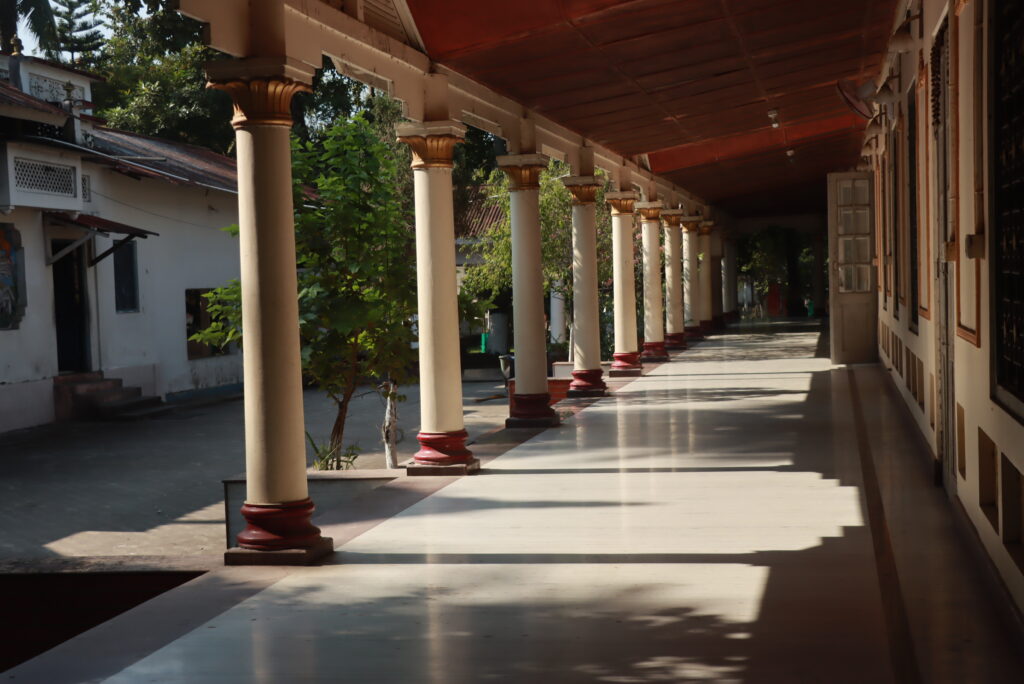


About Batadrava Than

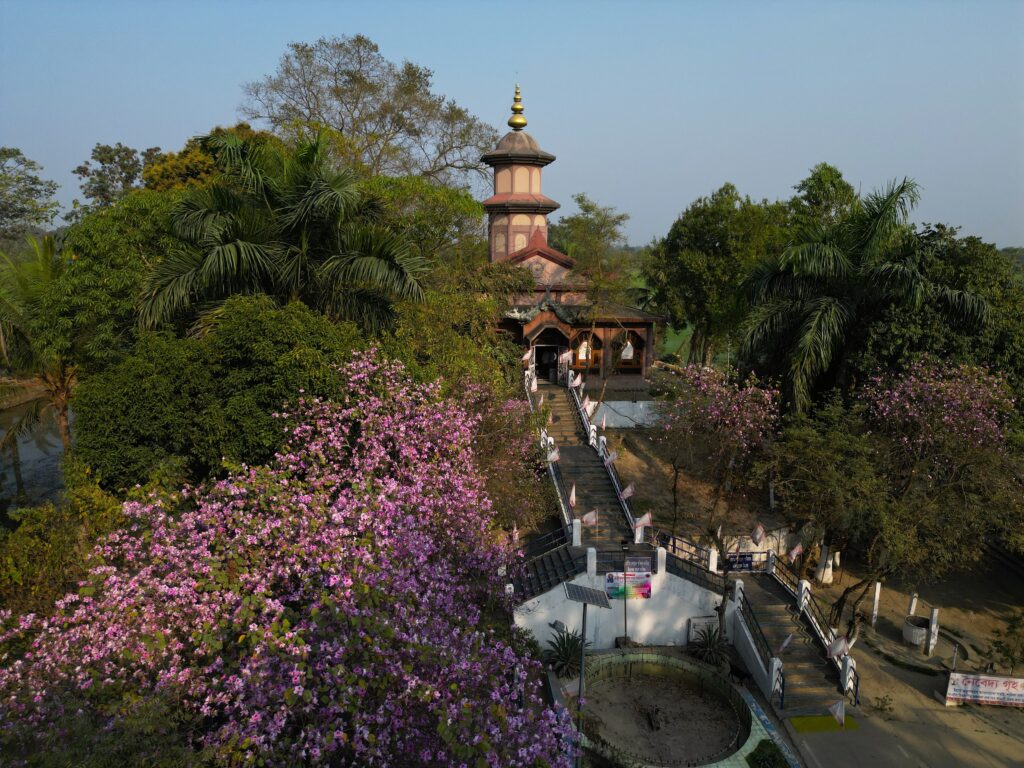
Batadrava Than, also known as Bordowa Than, is a place of immense historical and spiritual significance in Assam. It is not a recently viral site, but the birthplace of Srimanta Sankardev, the revered saint-scholar, social reformer, and founder of the Ekasarana Dharma. This sacred location has been a center of Assamese Vaishnavite culture for centuries, nurturing devotion, learning, and community life.

Today, Batadrava Than serves as a major pilgrimage site, attracting thousands of devotees and tourists who come to pay homage and experience the spiritual atmosphere of this blessed land.

Notice / Terms

  • Dress modestly while visiting the sacred premises
  • Photography allowed only in designated areas
  • Maintain silence and sanctity inside the temple
  • Remove footwear before entering temple premises
  • Follow the darshan timings strictly
  • Smoking and alcohol are strictly prohibited

About Mahapurusha Srimanta Sankaradeva

Mahapurusha Srimanta Sankaradeva (1449 AD -1568 AD) was an exceptional personality in the annals of Indian history. He was not only a religious preceptor, but also a social reformer, who had sanskritized the ethnic groups of the volatile North East India and assimilated them with the national main-stream ( Bharata Varisha). He is considered as the architect of the modern Assamese race. He was a great messiah, who rescued the people from the regressive medieval practices like human sacrifice.

The biography of Srimanta Sankaradeva was written by several authors in the later stage after his death. However, amongst the early group of authors, we come across Guru Caritas by Ramcarana Thakur, Daityary Thakur, Kantha Bhusan Dwija, which are believed as authentic documents of Sankardeva’s life . The late biographies differ from the early group on the count that they ascribe supernatural feats to Sankardev, and describe miraculous events. From all these caritas and including Katha Guru Carita, it appears that the accounts of Guru’s life are narrated in a mythological way. But historical value of these Caritas also cannot be denied, whatever, difficult it may be to determine the chronological events. Sankardeva in any case, was a great socio-religious reformer, a great litterateur, an institution of culture including classical dance and music, an artist and a sculptor and one of the first prose writers in the entire world. (The prose literature is found in the ‘Ankia Naats’). The Neo-Vaishnava faith propagated by Srimanta Sankardeva went a great deal , wherever he went or his religious emissaries cum disciples to eradicate the evils of caste distinction. It is to be mentioned here that prior to the spread of the new faith, Sakta –tantricism held the country. The Saivism was also prevalent. The Yogis and Buddhist Tantric were also spreading black magic. A personality, rich with immense multi-faceted qualities not to be found in any religious reformers of the world, Srimanta Sankaradeva influenced the lives and style of the people around and therefore, is considered by his followers as an incarnation of Lord Krishna, the Jagat Guru. In all the Vaishnava Sattras there is a system of studying and narrating Guru’s life story (Carit tola to eradicate the social evils from the society and to reassert human values including equal vision, sense of equality and nishkam karma). It is the philosophy, direction and guidance to human beings by Mahapurush Sankardeva.


As stated earlier, Sankaradeva, was born into the Shiromani (chief) Baro-Bhuyans family at Bardowa in 1449. His father was Kusumvara and the mother was Satyasandhya Devi. Sankardev lost his father when he was about 7 years old and his mother died after three days of ( Sri Sri Sankardeva and Sri Sri Madhav Deva , p 13 Lakshi Nath Bezbaruah) and there after he was raised by his grandmother Khersuti. The early flowering of the great genius was known, when he wrote his first verses karatala-kamala —. Sankara was baptized as Sankardeva by Guru Mahendra Kandali .

According to Carit Kara , he could swim across the river Brahmaputra while it was in spate. He practiced Yoga and his expertise as wrestler was known from the Carit puthi , when he won over a bull. The intelligent genius Sankara studied grammer and most of the scriptures of Sanatana Dharma during these days. After returning from Mahendra Kandali’s Tol,he attended to his responsibilities as Shiromani Bhuyan and came to be known as Dekagiri. Sankardeva , once expressed thoughts to his companion RamRam Guru to construct a ‘Deva Mandira’ at Bardowa. He got an institutional structure built at Tembuwani in 1468 AD. An idol of Lord Vishnu was found under the earth at the construction site. At the time of installation of the idol on the altar, the flowers given to the idol by the Brahmanas were found miraculously on the head of Sankardeva. Seeing all miracles, all the Brahmanas performing Puja asked him to give Sarana as Guru. Sankardeva wrote ‘Gopi Uddhava Sangvada’and gave Sarana to the Brahmanas by placing the scripture at the altar. . A prayer-house called Kirtanghar, which is surrounded by huts for the devotees was also constructed.It is also believed that he wrote his first work, Harishchandra upakhyan at that time to give Sarana Mahapurusha , while preaching his religious ideology often referred to heaven saying that Hari nama takes the people to heaven. One day , Burha Khan and other Brahmana pundits requested him to show the heaven as to how was that like. A high stage was built. He painted on tulapat or ginned cotton paper scenes of the sapta baikuntha (seven heavens),while performing “Chihna yatra” on that stage and played the role of Bayana, Natuwa, Sutradhar. He played the musical instruments by himself. “Chihna yatra” was staged continuously for seven days at Batadrava in 1468 AD. . This multi dimensional skills and knowledge in performing art, music, dance and acting influenced all sections of the people to Bhakti movement led by Srimanta Sankardeva .Carit karas wrote that Mahendra Kandali took Sarana from Sankardeva at that time.

Sankardeva married his first wife Suryavati when he was in 21 and a daughter, Manu, was born in about three years. . His wife died about nine months later. There was shortage of water in Bardowa. One night there was heavy shower and asking his disciples to chant Harinama, a miracle occurred. The Bata Briksha was drowned and a lake was created, which is presently known as Akashi Ganga. Sankardeva gave his daughter in marriage thereafter and went for pilgrimage for twelve years along with his disciples.

The pilgrimage :

Srimanta Sankaradeva went for the pilgrimage for twelve years in 1481onwards. During that period, he met scholars and had religious discourse with them mainly on Bhaktivada (Sanatan Dharma) . He was greatly appreciated and was able to preach his ideology in the rest of India .He first visited Jagannath Dham at Puri and moved westward to visit Gaya , Kashi, Prayag , Ayodhya and Sita Kunda along with his four disciples namely Sarvajoy, Paramananda , Ram Ram Guru and Baloram. There had been hordes of people at Puri who took to Eka Sharana Nâma Dharma. in 1493 AD at these places. From Prayag they went to Baraha Tirtha , Brindabana and Mathura. A distinguished scholar named Vrindavana Das also became disciple of Srimanta Sankaradeva at Vrindavan. Two ascetics named Radha and Trijata of Vrindavan and Vrajadham respectively were defeated by him in the debate by Srimanta Sankaradeva and they were brought to the Bhakti discipline.. From Brindabana they went to Dwaraka and then to Badarikashram, where Srimanta Sankardeva wrote a Bargeet ‘Mana Meri Ram charanahi Lagoo’. Ramakanta of Upa-Dwaraka and poet Gopinath of Puskar, also became his disciples From Badarikashram they returned to Bardowa.

Later part in Bardowa:

On his return from his pilgrimage (1493AD ), Sankardev refused to take back the Shiromaniship. At the insistence of his elders, he took back the responsibility of a hundred families (gomastha). He received a copy of the Bhagavata Purana from Jagadisa Mishra of Mithila and Mishra recited the entire Bhagavata in the presence of Sankardev . Greatly influenced he wrote Bhakti pradipa and Rukmini harana thereafte. The Guru married Kalindi Aai after his return from pilgrimage at the age of fifty four in 1503. Bardowa than was built thereafter to give a complete shape of Sattra like Naimisha Kshetra. in 1509 by establishing ‘cari hati’ , ‘kirtanghar’ and ‘Manikut’. The Kirtanghar or Namghar was the centre stage of Sattra and was managed in democratic way to be administered by bhakatas However this Sattra institution got its full shape at Patbausi only.

Shantijan:

The biographical text of Mahapurusha Sankardeva narrated creation of Shantijan as follows. There was a rivulet of river Brahmaputra, known as Tembuani Jan flowing by the side of the village Bardowa. The flood water entered through that rivulet causing damage to crops and property of villagers, who were the subjects of Bara Bhuyan. They prayed to Shiromani Bhuyan Sankardeva to take appropriate measures for protection of life and property from flood damage. Srimanta Sankardeva appealed to all people to identify one “sati “ ( chaste woman) saying that she had to bring one pot full of water to build the dam in a “Polo” ( a basket with three bamboo sticks for catching fish) . The wives of Brahmins failed in their attempts. Radhika heard it and as asked by Sankardeva, she attempted and brought the water in that Polo. The other people also participated thereafter to bring earth and the Tembuani Jan was diverted to the south. Bardowa was saved . Bardowa got a new name Tembuani Bandh thenceforth.Social evil of untouchability and gender inequality have no place in Sankardeva’s thoughts and philosophy. The rivulet is still flowing on the north of Bardowa and is known as ShantiJan.

The great social reforms started under the “Guru” from Bardowa. The “Guru” lived in Bardowa up to 67 years and left the place with his disciples leaving behind all the memoirs due to incessant attack by Kacharis.

Bardowa became deserted from 1515 AD to 1655 AD till it was rediscovered by Mahapurusha Sankardeva’s granddaughter –in- law Aai Kanaklata( Aai Lakshi) with the assistance and support provided by Ahom King Jayadhwaj Singha through Tangachu Phukan. The landmarks of Bardowa in Shantijan, Akashi Ganga and Daul (a high stage), as heard from her grandmother-in –law Kalindi Aai made her task easy to locate Bardowa than.

Ahom kingdom:

Due to the quarrel with the Kachari neighbours and their frequent attacks , Sankardeva decided to leave Bardowa along with his disciples and that brought to an end to the independence of ‘Bara Bhyuan’ in the year 1516–17. They first settled at Singari. Thereafter they further advanced to Routa and then to Gangmau in the Ahom’s territory. At Gangmau they stayed for five years where Sankardev’s eldest son Ramananda was born. At Gangmau, he wrote the drama Patniprasad.

Srimanta Sankardeva next moved to Dhuwahata near Ahatguri in the present day Majuli due to unsettled situation at Gangmau.The Guru met his spiritual successor ‘ barhar pu’ Madhav Deva , who was a Tantric that time . After a long debate, Sankardeva convinced him the principles of ‘Ek Sarana Namdharma’. Greatly influenced by Vaishnavism and Mahapurusha , he took ‘sarana’ in ‘ Namdharma’ ‘ At Dhuwahata Mahapurusha could attract a wider attention and popularity , which resulted in the initiation of many people to his newly founded faith. The popularity of Ek Sarana Namdharma and conversion of people alarmed the priestly Brahmins and they complained to Ahom King Suhungmung (1497–1539), against Mahapurusha . Sankardev was able to convince the king that he was not a religious rebel and a threat to the social order. After 14 years at Dhuwahata, Sankardeva escaped from the Ahom kingdom as they were apathetically treated and his son- in- law Hari was executed by Ahom King and Madhavdeva was made captive.

Koch Kingdom:

Sankardev and his followers reached Kapala in Koch kingdom in later part of 1540. They stayed there for 6 months. Thereafter they stayed for a brief period at Cunpora , where Bhabananda Saud took Sarana ,who was given the name Narayan Das Thakur Ata by Mahapurush Sankardeva. They moved to Kumarcuchi thereafter to finally settle at Patbausi in Koch Kingdom .

Patbausi:

Sankardeva was appointed as Gomostha by Koch King at Patbausi. Soon after he resigned from the Office and began to preach his religious ideology. Here a ,Muslim taylor Chandsai, was initiated. Some of the people he initiated here are Chakrapani Dwija and Sarvabhaum Bhattacharya, Brahmins; Govinda, a Garo; Jayaram, a Bhutia; Madhai, a Jaintia; Jatiram, an ascetic; and Murari, a Koch. Damodardev, a Brahmin, was also initiated by Sankardev, who was entrusted by Sankardev to initiate Brahmin disciples. A Sattra was also constructed for him at Patbausi itself.

Second pilgrimage:

Sankardeva set out for the 2nd pilgrimage from Patbausi accompanied by Madhavdeva, Ramrai, Ramarama , and others at the old age of ninety seven. Madhavdeva , on the request of Kalindi Ai ( wife of Sankardeva) brought them back within sex months from Puri.

Death at Coochbehar:

While Sankardeva was at Patbausi, many people conspired against him and reported to King Naranarayana that Sankardeva was corrupting the minds of the people by spreading a new religion. The King ordered his arrest. However, Chilaraya ,the Great Warrior kidnapped Sankardeva on the pretext of arrest and brought safely to his Palace . Chilaraya married Kamalpriya ( Bhubaneswari), the daughter Sankardeva’s cousin Ramrai while the Guru was at Patbausi, and that was most important event in the annals of Vaishnavite history of Assam . Chilaraya pleaded the King to give a hearing to Sankardeva before condemning him. The King agreed to do so. Sankardeva impressed the King by composing ‘Gunmala’ (the condensed version of ten chapters of Bhagavata Purana in a small booklet, called Bhurukat Hati Bharoa , meaning an elephant squeezed in to a lime pot) and got Royal support to freely spread his religion. Sankardeva began attending the Royal court at the king’s request.

All of Sankardev’s literary and dramatic works were completed here with Royal patronage and protection from the Koch King . Sankardev shuttled between Kochbehar and Patbausi. During his visits to the Koch Behar royal court, Sankaradeva agreed to have the narrative of Lord Krishna inscribed on cloth in pictorial form. Sankardeva engaged the weavers of Tantikuchi, near Barpeta, to weave the cloth depicting Krishna’s early life in Vrindavan. It is known as Vrindabani Vastra , now prese rved at British Museum London.Sankardeva left Patbausi keeping his family there for Bheladonga in Kochbehar as the king Naranarayana wanted him always in his court. One day , the king expressed his wish to be initiated. Sankardeva was against the initiation of kings as it might not be possible for them to properly submit their body and minds to the paramatma and in the midst of discipline of Nam Dharma. Sankardeva passed away after four months of stay at Bheladonga in 1568 .

Literary works :

Mahapurush Sankaedeva was a great and unparalleled literary figure of the 15th – 16th Century. He also brought cultural resurgence in the medieval Assam, accelerated the pace of development of fine arts like music and painting. Hari Narayan Dutta Barua wrote in the Introduction of ‘Srimanta Sankar Bakyamrita’ ‘ He enlarged the scope of language with the boldness of a creative genius , coined the novel idiom of ‘Brajabuli’ and added to the variety of the verse-forms’. Dr Maheswar Neog observed ‘The use of Assamese , an Indo-Aryan language , which formed but an island in a Tibeto-Burman sea, as the medium for the propagation of the neo-vaishnava faith led to its emergence as a language of all the people”.He further wrote “ His soul and his message of love have permeated into the national consciousness and very being of the people. His name is ever on his nation’s lips, and his music in the country’s heart”.

Hari Narayan Dutta Barua divided Sankara’s literature into three periods, conforming to his life respectively- in Kayastha’s territory , in the Ahom kingdom and in the Koch kingdom under the head of three periods as follows.

First period:

Harichandra-upakhyana, Bhakti-pradipa, Kirtana –ghosa (Uresha –varnan, Ajamila-upakhyana, Prahlada-caritra, Haramohona, Balichalana, Gajendra-upakhyana, Caturvimsati-avatara-varnana,Dhyana-varnana, Rukminiharana –kavya,Bargeeta, Bhagavata-VI (Ajamila-upakhyana), Bhagavata VIII (Gajendra-upakhyana, Amrita-mathana and Haramohana), Gunamala ( ch ii-vi).

Second period:

Kirtana –ghosa (Pasanda-mardana,Nama-aparadha, Sisu-lila, Rasha-krida, Kangsha-vadha, Gopi-Uddhava-sangvada,Kuji-vancha-purana, Akrura-vansha –purana sectiona),

Third period:

Balichalana, Anadi-patana,Kirtana –ghosa (Jarasandha vadha , Muchukunda-stuti, Naradar- Krishna-darshana, Bipra-putra-anayana, Damodara-bipraupakhyana, Daivakira –putra-anayana, , Vedastuti,, Lila-mala,Rukmimir-prema-kalaha, Bhrigu –pariksha, ) Bhagavata-X, XI, XII, Bhagavata-I and II,Nimi-nava-siddha –sangvada, Gunamala- ch-I, Uttarakanda- Ramayana, Bargeeta, Bhakti-Ratnakara, , Kaliya-damana nat,Keli-gopala nat, Rukmini-harana nat, Parijata-harana nat, and Ram-vijoya- nat, Totaya and Chapaya.

References

– Sri Sankar Bakyamrit Edited by Hari Narayan Dutta Barua , Sahitya Ratna (1953)
– Laxmi Nath Bezbaruah(1914), “Sri Sri Sankardeva and Sri Sri Madhavdeva”,
– “Glimpses of the Vaishnava Heritage of Assam”, Asom Sattra Mahasabha, Edited by Dr. Pradip Jyoti Mahanta (2001)
– “Glimpses of the Sattra Institution of Asom” (2006),Vivekananda kendra Institute of Cultura
– “Guru carit katha” 4th Edition, Edited by Dr. Maheswar Neog(2012)
– Articles on Sankardeva in the wesites
by H K Dev Mahanta, IAS

Office holders of Sri Sri Batadrava Than Parichalana Samiti

👤 President

Name: Sri Amlan Jyoti Dev Goswami

Satradhikar, Sri Sri Naruwa Satra

👤 Vice - President

Name: Sri Jugendra Narayan Dev Mahanta

Satradhikar, Sri Sri Salaguri Satra

👤 Working President

Name: Sri Gobin Chandra Das

👤 General Secretary

Name: Sri Lachit Bardoloi

👤 Assistant Secretary

Name: Sri Pranjal Hazarika

👤 Assistant Secretary

Name: Sri Sandip Kalita

👤 Treasurer

Name: Sri Badan Kalita

👤 Advisor, Former General Secretary

Name: Sri Brajen Kakati

👤 Advisor, Former General Secretary

Name:Sri Indra Muhan Baruah


Executive Members of Sri Sri Batadrava Than Parichalana Samiti

1/ Sri Pranjal Kalita
2/ Sri Rupam Kalita
3/ Sri Tapan Kalita
4/ Sri Mrinal Kumar Kalita
5/ Sri Pranjal Bora
6/ Sri Durlav Bora
7/ Sri Raju Baruah
8/ Sri Amrit Baruah
9/ Sri Ganesh Das

Major Events

📅 শঙ্কৰ উৎসৱ ২০২৫

সাংস্কৃতিক অনুষ্ঠান – দায়িত্ব বণ্টন
কাৰ্যসূচী জড়িত ব্যক্তি
সাংস্কৃতিক শোভাযাত্ৰা নিপুমণি দেৱ গোস্বামী, প্ৰাঞ্জল বৰা, গৌতমগীৰি গোস্বামী, মৃণাল কলিতা (পাপা), সন্দীপ কলিতা, লক্ষ্যজ্যোতি বৰা, দূৰ্ল্লভ বৰা, প্ৰাঞ্জল কলিতা, তপন কলিতা, মৃণাল কলিতা (বুবু), পবিত্ৰ কলিতা, ক্ষীৰোদ কলিতা, উন্কাজ্যোতি কলিতা, পংকজ কলিতা, ধ্ৰুৱজ্যোতি কলিতা, প্ৰশান্ত কলিতা
অভ্যৰ্থনা বিকাশ কলিতা, বিনয় কলিতা, কৈলাশ হাজৰিকা, বিপিন বৰা, লক্ষ্যজ্যোতি পাঠক, মানসজ্যোতি কাকতি, পাৰ্থপ্ৰতিম কলিতা, কল্পজ্যোতি তালুকদাৰ, শান্তনু কলিতা
বৃক্ষৰোপন উজ্জ্বল জ্যোতি দেৱ গোস্বামী, নিপুমণি দেৱ গোস্বামী, গৌতমগীৰি গোস্বামী, উন্কাজ্যোতি কলিতা, বিশ্বজ্যোতি হাজৰিকা, প্ৰবাল কেওঁট, পিকুমণি কলিতা
দিহানাম বিনয় কলিতা, মানসজ্যোতি কাকতি, শেখৰ বৰুৱা, পাৰ্থপ্ৰতিম বৰা, ৰাজকিশোৰ বৰা, ভাৰ্গৱ বৰা, বিপিন বৰা
বটদ্ৰৱা থানৰ Website উন্মোচন প্ৰাঞ্জল বৰা, উজ্জ্বল জ্যোতি দেৱ গোস্বামী, পাৰ্থপ্ৰতিম কলিতা, লক্ষ্যজ্যোতি বৰা, মৃণাল কলিতা (বুবু)
চিত্ৰাঙ্কন আৰু ৰচনা প্ৰতিযোগিতা নিপুমণি দেৱ গোস্বামী, বিকাশ কলিতা, বিনয় কলিতা, নিৰুপম কোৱঁৰ, সন্দীপ কলিতা, মৃণাল কলিতা (পাপা), উন্কাজ্যোতি কলিতা, কৈলাশ হাজৰিকা

Facilities

🅿️ Parking

Spacious parking facility available for cars, buses, and two-wheelers. Security personnel on duty.

🏨 Accommodation

Guest houses with basic amenities for pilgrims. Advance booking recommended during festivals.

🍽️ Prasad Hall

Community dining hall serving vegetarian meals. Free prasad distribution during special occasions.

📚 Library

Extensive collection of religious texts, manuscripts, and books on Assamese culture and Vaishnavism.

🚻 Restrooms

Clean washroom facilities with separate sections for men and women. Disabled-friendly access available.

🏪 Prasad Shop

Shop selling religious books, CDs, traditional items, and blessed prasad items.

Photo Gallery

📷
📷
📷
📷
📷
📷
📷
📷
📷
📷
📷
📷

E-Museum

“a great vaishnava revival under Sankardeva in the sixteenth century has made the assamese people kindly, tolerant and humane”
Mahatma Gandhi

1.Bordowa historical background:

In different writings of the yore Bordowa has been called a village or a Jana pada(a large geographical administered unit).SrimantaSankardeva is said to have been born at Bordowa on the midnight of a new moon on the Kartika Sankrantiday in the Saka 1371 (1449 AD).He grew up here among the admiring relatives and the subjects of the Shiromoni Bhuyans(Chief of the Bhuyan clan). He got educated under the tutelage of the Brahmin Pandit Mahendra Kandali. Sankardeva demonstrated streaks of innate genius in him by display of exemplary feats including writing skills. He got married and took the mantle of leadership of the community. After the demise and marriage of his daughter he left for his famed pilgrimage—a sojourn destined to have a determining impact in the subsequent history of Assam.

On his return to Bordowa from the pilgrimage, a very important event was the arrival of a Brahmin pundit called Jagadish Mishrafrom Puri who is said to have been divinely ordained to chant the Bhagawatato Sankardeva. Thus, the insights developed through the pilgrimage and the Bhagawata had kindled the spirit of Krishna, the principal character in the Bhagawataas the human manifestation of the supreme deity. This he propagated through art, culture and literature and most interestingly a well laid out plan of brilliant social engineering and organizational structure in his scheme of things. Focus was the common man and the simple lot and their path to salvation was not to be some complex, inhuman and magical totems but through a system of aesthetic diasporas on the basisof age oldscripts made easy to comprehend by adroit transliterationand updated to accommodate the indigenoussociocultural milieu.

2. Location of Bordowa and significance of the Than:

Bordowa also known as Batatdrawa is a Than1, situated in the Nagaon district of Assam, 140 kms away from Guwahati. It is a holy pilgrimage site where the Vaishnava Saint Shri Shri Sankardeva was born.

Bordowa is stated to be a Than – a holy shrine – instead of being a Satra, because it was not organised like a Satra in style and function. Bordowa is a Than, a seat of Pilgrimage for containing some relics of the past which are directly related to the birth and activities of Sankardeva. Bordowa Than, birth place of Mahapurusa Sankardeva is a repertoire of wood carvings.

In Bordowa, Sankardeva constructed the first community prayer hall called by nomenclatures like devogriha, harigriha and kirtangriha and most popularly naamghar2 which had later become the model of nucleus of the Satra institution. Gradually the numbers of followers of the Guru began to swell and the newly constructed community prayer hall had become the epicentre for the lives and pursuit of the devotees. He is also said to have constructed the Doul mandirand laid the foundation of the dormitories (hatis) around the kirttanghar during his years at Bordowa. The seeds of the Assamese renaissance were sown here itself when the great master had conceptualized and performed the magnum-opus Cinha Yatra(one act play or ankiya naat). The role assigned to the Satras of guardianship over the disciples was started by the great master himself in Bordowa when he donned the multiple roles of an administrator, preacher, preceptor, writer, composer, artist and performer.


Fig: Naamghar in Bordowa Than
Than1-a holy shrine, naamghar2– prayer hall

3. Rediscovery of the site:

Nothing much is heard about Bordowa following the exit of the great master for a long time. It was only after three generations, when Kanaklata, wife of Sankardeva’s youngest grandson set-out eastward along with her adopted son Damodora with a mission to re-discover the holy arena, where the spiritual and cultural renaissance was brought about by the great master. They camped at the south bank of Brahmaputra and continued with the practice of Vaishnavite monastic order. This place, where some disciples were also settled came to be known as the Bali Satra. Damodora then moved to the south and impressed the chieftain of a local tribe who had facilitated Damodora’s hunt for the place of the Guru. The tribal king Cetuwa later was initiated into the faith. Damodora was also summoned by the Ahom king Jayadhvaja Singha to his court and also was granted a plot of land for establishing a new Satra. This place is known as Vasudeva Thaan Narowa Satra situated on the bank of the river Kadha, near Dhakuakhana. Later, with the help of two royal officers, Tangshu Phukan and Mohidhar Buragohain, Damodora succeeded in his mission of locating the holy place, Bordowa. As the new Satraat Bordowa began to take shape, Damodora established another Satraat Bordowa known as the Kuji Satra.

After Damodora’s demise, his son Ramakanta began looking after the development of the Bardowa Thaan. There had been a quiet dispute on the right of running of the Bardowa Than between the descendents of Kanaklata and those of Ramakanta. Ananta Raya, grandson of Kanaklata through her daughter Subhadra had earlier established his sattra at Kowamara near the present day Sivasagar. His sons established aSatraat Kalugaon Salaguri and had earned royal patronage of the King Kamaleswar Singha who became a disciple of the Salaguri Satra. The King, through copper plate inscriptions gave ownership of a small part of the Bordowa Satra away to Salaguri Satra. Since then Bordowa is managed by both Narowa and Salaguri groups. The dual ownership of the premises had its ramifications in bifurcation of ritualistic practices and also literary and cultural pursuits.After independence of India a section of enlightened devotees worked hard to unify both the groups. This has resulted in reconstruction of the kirttanghar in the year 1958 to be used by both the groups. To conduct and manage the affairs of the Satra, a management committee was formed. Harinarayan Dutta Baruah, Haladhar Bhuyan, Motiram Borah, Bishnuram Medhi, Tirtha Nath Dev Goswami and Mitradev Mahanta were some of the leading citizens of the state who had worked towards ensuring a democratic management of the Bordowa as it exists today. Thus Bordowa is now a Thaan– a holy shrine under the auspices of two Satras, managed by a committee as per a constitution. As of today, Bordowa is flanked and managed by two household Satras bearing the names Narowa and Salaguri on its north and south respectively.

Keeping the rich tradition alive, the groups in and around Bordowa encouraged writing of plays and poetry. In addition, the art of mask making, manuscript writing and painting along with woodcarving, sculpture making became respectable vocation actively encouraged by the succession of pontiffs. Among such talented preceptors the name of Lakshmideva would figure prominently. Another scholar Sasadhar of Aibheti Na-Sattra (Salaguri) commissioned illustration of manuscript of Parijat Harana, another play detailing snatching of the heavenly flower. Kesakanta (Charaikhola), Khagendraand Vamsidhar of Aibheti were famous for mask-making and wood works. Vamsidhar’s son Chandrakanta lifted the ban of entry of the schedule castes to the naamgharand administered initiation to that community for which, he was excommunicated by the then Mahanta Society of Bardowa group of Satras. Equally expert in mask-making was Padma of Bhogbari. His forefather Mohanchandra wrote few dramas.

4. Bordowa mini museum

The museum is situated at the heart of the Bordowa Than near the Akashiganga lake in the picturesque of beautiful natural serene. The bordowa mini museum was set up in 1985 by a committee of the Bordowa Than under the aegis of the Directorate of State museum.


Fig: Bordowa mini museum

Objectives:The main aim of setting up this museum is to preserve the cultural heritage of the Vaishnava community of Assam, which is fast diminishing due to the impact of modernisation. This museum has taken painstaking effort to preserve the material culture of the Than and putting forward the rich collection which has survived from the days of Sankardeva in its original state and to induce cultural awakening among the masses.

The museum lays emphasis in collecting socio-cultural and religious objects of the Vaishnava community. The present collection of the museum holds around 103 objects of different types. Most of the objects are wooden artefacts believed to have been once a part of the Than used for various socio-religious purposes. Apart from wooden objects there are few metal objects put on display.

An eminent museologist has said that the collections of a museum, however rich and important they may be, are only of real value to the extent they are made use of by the public and the extent to which the public is able to benefit by the instruction and entertainment they are intended to afford.

The collection of wooden structures kept in the museum are perhaps mere remnants of a wonderful treasure that must have got destroyed over centuries because of ravages of time and unthinking human intervention. Some connoisseurs like Dr. Naren Kalita of Bordowa had played an important role in surveying and retrieving the ones kept in the museum.

The ancient artwork of Bordowa may be divided into the
1)doors/arches(fig 1.)
2)the pillar mounted wooden statues (fig2. )
3)the wooden wall panels.(fig3.)
4)Wooden materials used during naam-prasanga (fig4.)


4.1 Museum Collection:

Doors, coated with molded brass sheets having a number of figures are few rich collection of the museum. The wood carvers are found to be very adroit in their treatment of space and composition in the limited picture frame for pictorial delineations. There are very interesting secular subjects also, found to be adorning the walls of the Bardowa Thaan. The elephant fights, buffalo fights and scenes of animal hunting are also found as a part of temple decoration. Dr. K.K. Dasgupta draws a parallel of these carvings with those of Babylonian and Assyrian repertories of the remote past. Dr. Dasgupta is also very impressed with the four panels illustrating the act of slaying of Bali by Rama.

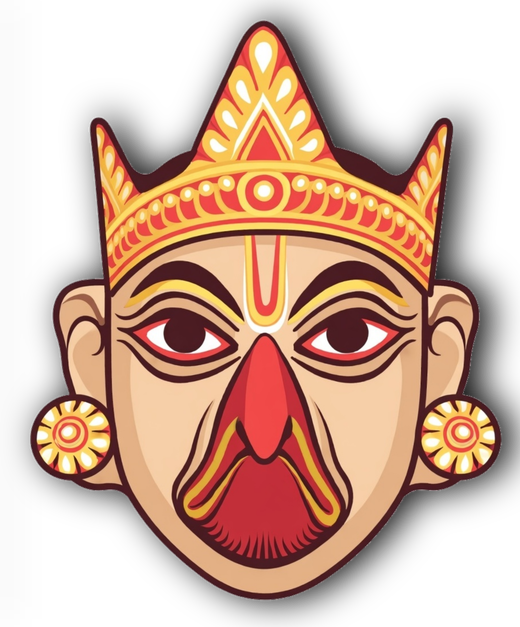
Among the other significant statues are those of Garuda and Hanuman. Here also, the Bardowa artists accentuated the prominent body parts like eyes and facial muscles to make the characters display an expression of bhakti– the hallmark of the culture.

Sankardeva initiated a vigorous religious movement, the Bhakti movement, with the doctrine to surrender to one God, Krishna, during 15th -16th century AD. Along with the formation of a distinct regional identity of Assamese Bhakti Culture and literary tradition, also, wood carving was one of the fields which in direct response to the movement and the cult of Bhakti began to flourish as a major form of art of the people. Guided by an impulse to decorate the places of worship, the local artisans created stylistic variation in the medium of wood. Moreover, since woods were easily available locally, it provided support to the development of the art form.

The objects were always a part of the socio-religious culture of the Than. The different Satras in Assam have preserved very few specimens of wooden objects of art belonging to the past tradition.

Bordowa Than retains a considerably big repertoire of wood carvings of the past. These objects have been recovered from an uncared state by Dr. Naren Kalita at the Than premises and thus it was decided to put up on display on 1985.

The significance of the wooden objects is its intrinsic artistic carvings and is very closely linked with parallel developments in literary traditions of the Mahabharata and Ramayana epics.

4.1.1 Objects:

There are 103 objects in the collection of the museum. Most of the objects are wooden panels, wooden doors, wooden pillars and other wooden materials used during religious rituals in the Than. The objects on display belong to 17th-19th century. Due to lack of preservation most of the objects are destroyed. The objects were collected from the Than on a very late period.

Significance of the objects: The persistent belief around the objects was that they were representations of eighty out of eighty one categories of bhakti that the human beings could visualise on earth. This was the reason for the display of the objects in the shrines. Therefore, for the understanding of the social significance of the display it would be necessary to look at the areas to which the embellished objects belonged and which greeted the eyes of the beholders. We can break up the areas as below:
The facade and the doors.
Walls around the kirtan-ghar.
The pillars and pillar-capitals.
The areas inside the prayer-hall.
The component parts other than the kirtan-ghar.
Some of the objects on display are:


1. Figures of birds and animals carved on wood

2. objects displayed in


3. Different objects displayed in showcase

4. Carved wooden pillars

4.1.1.1 The artisans/wood carvers: The Satra artisans were meticulous in their treatment of the avataras of God. They had, in fact, a distinct programme of carving the avatara figures as visual accompaniment to the literary tradition and embellished the walls and the doors of the shrines whenever they found scope for their treatment. The available specimens show that these figures were carved in isolated panels to make their impact profound on the viewers. These figures were carved sometimes in high relief and sometimes in the round shape.

Bordowa Than is comparatively richer in terms of avatara figures. There are as many as nine images of seven avataras. Each of the images carved in high relief was provided with a separate picture-frame in some continuous friezes. The carvers were meticulous in their treatment of space and composition in the limited picture-frame provided to them for pictorial delineation. So, we have found the carving of the image of Narasimha in a balanced composition. The image is seen caressing his long tail with his two hands, above his head a host of subjects dealing with divine and semi-divine beings together with accessory subjects drawn from day-to-day life and environment formed an integral part of sculptural decoration.

The Bordowa panel depicting the composite image of Hari-Hara is interesting for the physical presence of the vahanas of Hari and Hara along with the image at the centre. In illustrating the image the carver deviated from the standard iconography and followed contemporary improvisations derived from the local idiom.

Stories from the Ramayana constituted the major narrative compositions on the panels carved by the artists at Bordowa. It is stated that the old kirtan-ghar at Bordowa before its demolition for reconstruction in the fifties of the last century had the entire Ramayana translated into the medium of wood.

Bordowa Than presents a few rare pieces of pillars illustrating some divine and semi-divine beings. Life-size carvings of Brahma, Vishnu, Siva, Narada and Ganesha constitute the pillar-statues. Although looking like tribal totem-poles, they do not represent any belief associated with tribal society in the naam-ghar. The carvers derived their images from the local literary tradition and the cylindrical format of wood contributed to their forms marked by sensitively rounded and plastic volumes.

Of all the sculptures, the most significant one is the colossal figure of Garuda, a semi-divine winged god, in the kneeling posture. Bordowa Than possesses a few pieces of sculpture of the winged god. The Satra artists developed the form of Garuda as a hybrid one with a prominent beak and wings of a bird. One of the Garuda sculptures in the museum forms a variety by itself. It has no wings; its face with a curved beak is emphasised by the deeply furrowed lines creating the eyelids and the brows. The carver maintains the cylindrical feature of the medium in carving in the pot-belly and closely knit limbs in the figure. Rhythm of line creates movement in the figure and endows it with a sinuous contour of round and sensitively modelled plastic volume. The artists of Bordowa also carved two images of Hanumanaportraying him in two different aspects. In the aspect of a hero, he is seen carrying Rama and Laksmana on his shoulder immediately after rescuing them from the world of Ravana. Rama and Laksmana are holding Hanumana’s head closely and the feet of the former dangling on either side of the breast of the latter have enriched the figure in equipoise and balance. Hanumanais a devotee in his other aspect. To represent him in this aspect the Satra artist devised his iconographic norms as wearing a garland of rudraksa and holding a ladu or ladduka in his right hand. The Bardowa figures of Hanumana with his eyes housed in large concaves being accentuated by arch-like eye-brows are expressive of his inner feelings.

4.1.1.2 Method of carving of the wooden objects:

The method followed by the Satra artists of Assam in carving sculptures was one of deep incision inside the wooden panel. It is known as charaikhuliya in which charai and khuliya stand for bird and carving respectively: it is similar to the woodpecker’s method of digging holes in the tree. In this method, the uncut portions of wood remain raised to give the pattern of the objects.

All objects require to be executed in two distinct phases. The first phase is called kondhowa meaning slicing off the surface in flakes. In the final stage, further work is done upon the patterns to give finish to the objects. Thereafter, the sculptures, whether relief or in the round, are painted with colour. As regards finish, it can be said that the carvers practised an extremely primitive carpentry with a limited number of tools comprising an axe, a knife and a few batalis (chisels) of various sizes and shapes. These tools are very much useful for creating a very impressive texture with imprints of the edges on the sculptures.

4.1.2 Collection policy:

A written collection policy is not followed by the Bordowa mini museum. It is through the experience and local skills that the museum incharge collects objects relevant to the museum or materials related to Sankardeva. The museum collects the objects related to Bordowa Than and from the neighbouring areas in Bordowa.

Collections are mainly done through donations and gifts and explorations.

Collection through exploration is carried out by the peon employed to look after the museum by the Assam State Museum authority. Sometimes when situation gets critical, such as negotiations are required to be made for acquiring the object from the locals, a high official from the directorate of museums, Assam takes care of it.

Though from past few years the collection of the museum is not growing and the 103 objects it holds in its collection is a very few number if seen from the date it was established, i.e a period of 27 years.

4.2 Documentation:

“It is an important professional responsibility to ensure that all items accepted temporarily or permanently by the museum are properly and fully documented to facilitate provenance, identification, condition and treatment.” (ICOM Code of Professional Ethics, 1990, p. 31, nr. 6.2)

Objectives of museum documentation

->Ensure accountability for objects: they can be used to define the objects that are owned by a museum, identify the objects, and record their location.
->Aid the security of objects: they can be used to maintain information about the status of objects and provide descriptions and evidence of ownership in the event of theft.
->Provide a historic archive about objects: they can be used to maintain information about the production, collection, ownership, and use of objects and as a means of protecting the long term value of data.
->Support physical and intellectual access to objects: they can be used to support access to objects themselves and information about the objects.

Documentation of the objects in Bordowa mini museum:

It is a matter of utter surprise that a proper documentation system is not followed by the authority. The museum houses the most valuable treasure related to the Assamese Vaishnava community and which is indeed a mirror to the roots of the Vaishnava culture and related practices and a clear evidence of the presence of the great saint Sri Sankardeva whose path is still being followed in Assam.

Fig:Documentation of the objects in Bordowa mini museum

The museum keeps a record of the incoming objects as well those put on display in a single leaf handwritten white paper. No Registers (general accession register, classified accession register) is maintained for the objects in the museum premises. Though the authority claims to have one register for the objects but they failed to produce the same within a time period of 30 days. Only the name and the size of the objects are mentioned in the record paper. The objects are not given any accession number or identity number neither any details about the object is written on the record paper.

4.3 Display of the objects:


Fig:floor plan of Bordowa mini museum.

The objects are very poorly displayed. There are no written panels to communicate with the group of objects.

The objects are displayed in 3 corridors and 2 halls. Most of the objects are made of wood. The wooden panels are seen nailed to the walls or hunged to the support of the nails. There is proper lighting system or ventilation in the halls and the corridors. The walls are not painted which leaves a very dull and bad picture of the antiquities on display. The objects displayed in the showcases are not put in the height of the viewers eyelevel. Most of the objects are congestedly displayed by hanging them to the walls.


Display of objects in showcases Display in the corridor

4.4 Labelling and signage:

Signage for direction are placed inside the galleries and near the corridors. Captions are given to almost all the objects but the placement of the captions is another poor story of the museum display. The letters written in the captions are not clear enough to read. Some of the captions are placed at the bottom of the objects, while some are just placed atop the objects. Some of the captions only read the name of the object or the depiction of the object. Much information is not available in the captions placed along with the objects.


fig: signage and captions inside the museum

1.condition of the objects:

Most of the objects are organic in nature. Due to poor control of temperature and humidity inside the museum hall the objects are slowly deteriorating. Some of the objects are already been destroyed and thus are removed from the museum collection. Also, steps for preventive conservation are not taken by the museum staff. Some of the common problems detected in the objects are:

Insect attack and Cracks. Also nailing the objects to the wall for display is another reason which causes cracks in the objects.


Fig: condition of the objects displayed in the museum

4.6 Visitors:

Bordowa Than being a pilgrimage site, attracts visitors from all over Assam as well foreign tourists. The museum is situated at the heart of the Than, therefore it attracts the most number of visitors. It is said to be the 2nd museum after Assam State museum in Assam which draws the maximum number of visitors every year.


Fig: visitors in Bordowa mini museum

5.Museum of a sacred place:

One of the longest standing and most traditional ways to envision the museum is a sacred space. This is an iconic image to which many museums still aspire. In the paradigm of the shrine, the museum has therapeutic potential. It is a place of sanctuary removed from the outside world. Museum collections are fetishized, the museum as shrine declares that its objects possess an aura that offers spiritual enlightenment as it inspires platonic values of beauty and morality.


Fig: visitors opening shoes before entering the museum

The objects used during naam-prasanga and the wooden panels of the naamghars forms the nucleas of the collection of the museum. It is regarded as a sacred space where equal importance and respect is given when one enters the Naamghars in an assamese village or in any Satra institution. The objects are visualized as the spiritual image of Sankardeva by the visitors. One has to enter the museum by opening his/her shoes or slippers. This shows the Bhakti infused in the space and thus implies an attempt to create an understanding and learning among the visitors that the museum in itself is nothing but a sacred space devoted towards God through the art works.

6.Conclusion:

In conclusion it may be said that the Bordowa mini museum which was started on 1985 in the premises of the bordowa Than has survived the test of time and has become an important institution of public interest as a sacred place. The process of urbanization and modernisation has brought many modern gadgets to the people along with pace of progress and as a result traditional articles of material culture have gradually become almost obsolete. It is now very difficult to find genuine original articles of people’s arts and crafts for procurement as specimens for the museums. Every local people often visit to see their original articles in the museum.

There is now a growing demand from the people themselves for establishment of museums for preservation of their traditional cultural heritage. The people are realising that their traditional articles or material culture may not survive in the face of heavy induction of modern articles into their life, therefore bordowa mini museum is a platform established in the sacred space where the objects reflect the vaishnava cultural heritage of the assamese community and has aptly put forward the identity of the assamese vaishnava community.

Bibliography:

Neog, Maheshwar (1980).Early History of the Vaishnava Faith and Movement in Assam. Delhi: Motilal Banarasidass.
Nath, S N (2012).SATRA SOCIETY AND CULTURE, Pitambardeva Goswami and History of Garamur Satra. DVS Publisher.ISBN978-81-86307-56-4.
Sarma, S N (1966).The Neo-Vaisnavite Movement and the Satra Institution of Assam. Gauhati University.
Das, Jugal: Asamar Loka-kala, Publication Board, Assam.
Dasgupta, Dr. K.K: Eastern Indian Wood Carvings, Firma KLM, Calcutta.
Kalita, Dr. Naren: Bardowar Silpavastu, Geet-Pad, Nagaon.

LIST OF LIFE MEMBERS

Share Your Experience

Share your spiritual journey, memories, and experiences at Sri Sri Batadrava Than with fellow devotees. Your stories inspire others and keep the legacy alive.

🏨 Where to Stay

On-site Guest Houses Contact for Booking:
📞 +91-XXXXXXXXXX
📧 stay@batadravathan.org
Note: Advance booking recommended during festivals

Bibilography

Important books and articles about life, works and philosophy of Srimanta Sankaradeva:

(All sources are in Assamese language unless otherwise stated)
1. Barua, Dr Birinchi Kumar, Sankardeva : vaisnava saint of Assam, (English), 1st edition, Guwahati, 1960 AD
2. Bezbarooah, Dinanath, Bar Charit, written in 1873-1895 AD, 1st edition, Jorhat, 1987 AD
3. Bhuyan, Bhuban Chandra, Vaishnava dharma baa nam dharma, part II, enlarged 2nd edition, Guwahati, 1980 AD
4. Bezbarooah, Lakshminath, Sri Sankaradeva aru Madhavadeva, 3rd edition, Guwahati, 1988 AD
5. Bora, Karuna, Sattriya Nrityar Roop Darshan, Grantha Sanskriti, Jorhat, 2nd edition, 2009 AD
6. Borkakoti, Dr Sanjib Kumar, Srimanta Sankaradeva : an epoch maker, (English), 1st edition, Eastern Book House, Guwahati, 2012 AD
7. Borkakoti, Dr Sanjib Kumar, Sankaradevar Ekasarana Tattva, 1st edition, Kareng Prakashan, Moran, 2003
8. Borkakoti, Dr Sanjib Kumar, Charit puthir tulanamulak adhyayan, in Nagaon Zila Sahitya Sabha Patrika, Issue no. XI, edited by Dipak Bora, Nagaon, June, 1997 AD
9. Borkakoti, Dr Sanjib Kumar, Economic thinking of Srimanta Sankaradeva, (English), in The Assam Tribune, March 30, 1998 AD
10. Borkakoti, Dr Sanjib Kumar, Absence of Sakti worship : a unique feature of Eka-Sarana Harinama Dharma of Srimanta Sankaradeva, (English), in Mahapurusa Jyoti, Research Journal of Srimanta Sankaradeva Sangha, edited by Dr. Suresh Chandra Bora, Volume V, Nagaon 2003 AD
11. Borkakoti, Dr Sanjib Kumar, Sri Sri Sankardeva, (English), 1st edition, Bani Mandir, Guwahati, 1995 AD
12. Borkakoti, Dr Sanjib Kumar, The unique philosophy of Srimanta Sankaradeva, (English), in Mahapurusa Jyoti, Journal of Srimanta Sankaradeva Sangha, edited by Dr. Suresh Chandra Bora, Volume IV, Nagaon 2002 AD
13. Borkakoti, Dr Sanjib Kumar, Evolution of Sankari art form, (English), in Panchajanya, Souvenir of Srimanta Sankaradeva Sangha, edited by Kailash Das, Mangaldoi, 2004 AD
14. Borkakoti, Dr Sanjib Kumar, Evolution of Sankari dance, (English), in The Assam Tribune, Guwahati, May 9, 1998 AD
15. Borkakoti, Dr Sanjib Kumar, Srimanta Sankaradevar vishaye vampanthir apaprachar, in Ajir Batori, edited by D.N.Chakravarty, Guwahati, June 10, 17, 24, July 2,15, 1998 AD
16. Borkakoti, Dr Sanjib Kumar, Sankaradeva aru Marx, in Boodhbar, edited by Dilip Sarma, Guwahati, May 20-26, 1998 AD
17. Borkakoti, Dr Sanjib Kumar, Srimanta Sankaradeva adhyayanat bibhranti, in Ajir Batori, edited by D. N. Chakravarty, Guwahati, April 23, 1998 AD
18. Borkakoti, Dr Sanjib Kumar, Shikshavid Srimanta Sankaradeva, in Agradoot, edited by Kanaksen Deka, Guwahati, September 15, 1996 AD
19. Borkakoti, Dr Sanjib Kumar, Srimanta Sankaradevar Kirtana-ghosha, in Sutradhar, edited by Medini Choudhury, Vol VIII, No 15, Guwahati, August 1-15, 1996 AD
20. Borkakoti, Dr Sanjib Kumar, Srimanta Sankaradevar chintadharat samyavadi upadan, in Ajir Batori, edited by D.N.Chakravarty, Guwahati, November 25, 1998 AD
21. Borkakoti, Dr Sanjib Kumar, Saint Srimanta Sankaradeva, (English), 1st edition, Chandra Prakash, Guwahati, , 2008 AD
22. Borkakoti, Dr Sanjib Kumar, Sarvagunakara Srimanta Sankaradeva, (English), 1st edition, Nagaon, 2000 AD
23. Borkakoti, Dr Sanjib Kumar, Sri Sri Namghosha bhashya, 1st edition, Guwahati, 1992 AD
24. Borkakoti, Dr Sanjib Kumar, Srimanta Sankaradeva aru Madhavadevar rachanat Guru-tattva, in Bhakatara Kalpataru, Nagaon, edited by Netra Kamal Borthakur, October, 2002 AD
25. Borkakoti, Dr Sanjib Kumar, Srimanta Sankaradeva aru Madhavadevar Bargeet, in Pragati (souvenir), edited by Indreswar Goswami, Nagaon, November, 1998 AD, reprinted in Sankaradevar Ekasharanatattva, Dr Sanjib Kumar Borkakoti, 1st edition, Moran, 2003 AD
26. Borkakoti, Dr Sanjib Kumar, Sankaradevar dharmat Eka Sarana tattva, in Natun Dainik, edited by Surjya Hazarika, Guwahati, December 20, 1993 AD
27. Borkakoti, Dr Sanjib Kumar, Sankari dharma aru samantajugiya arthaniti, in Boodhbar, edited by Dilip Sarma, Guwahati, April 1-7, 1998 AD
28. Borkakoti, Dr Sanjib Kumar, Jagadguru Sankaradeva, 1st edition, Kareng Prakashan, Moran, 2004
29. Borkakoti, Dr Sanjib Kumar, Sankaradeva adhyayanat bisangati, 1st edition, Purba Bharati Prakashan, Guwahati, 2005
30. Borkakoti, Dr Sanjib Kumar, Sarbabharatiya prekshapatat Srimanta Sankaradevar sthan, Lecture delivered at Mahapurush Sankaradeva Kala Krishti Gaveshana Kendra, Jorhat, June 5, 2004 AD
31. Borkakoti, Dr Sanjib Kumar, Unique contributions of Srimanta Sankaradeva in religion and culture, (English), Srimanta Sankaradeva Sangha, Nagaon, 1st edition, 2006 AD
32. Borkakoti, Dr Sanjib Kumar, Ethnic integration by Srimanta Sankaradeva, (English), in Chinta Sarobar, Souvenir of eleventh central conference of children and women, Srimanta Sankaradeva Sangha, edited by Madhab Bora, Gahpur, November 12, 2005 AD
33. Borkakoti, Dr Sanjib Kumar, Mahapurusha Srimanta Sankaradeva, (English), 1st edition, Bani Mandir, Guwahati, 2005
34. Borkakoti, Dr Sanjib Kumar, Mahapurusha Srimanta Sankaradeva : a brief account of his life and works, (English), 1st edition, Oriental Institute for Sankaradeva Studies, Guwahati, 2004 AD
35. Borkakoti, Dr Sanjib Kumar, Sankari Sahitya aru Sanskritir Baisistya, 1st edition, Oriental Institute for Sankaradeva Studies, Guwahati, 2006
36. Borkakoti, Dr Sanjib Kumar, Namghosha : The Oriental Gem, (English), 1st edition, Bani Mandir, Guwahati, 2006
37. Borkakoti, Dr Sanjib Kumar, Purnanga Katha Gurucharit, 1st edition, Bani Mandir, Guwahati, 2007
38. Borkakoti, Dr Sanjib Kumar, Place of Srimanta Sankaradeva in all India perspective, (English), 1st edition, Mahapurusha Sankaradeva Kala-Kristi Gaveshana Kendra, Jorhat, 2007
39. Borkakoti, Dr Sanjib Kumar, (editor and transcreator) A Treatise on Sankari Music, (English), original by Golap Mahanta, 1st edition, Srimanta Sankaradeva Sangha, Nagaon, 2007
40. Borkakoti, Dr Sanjib Kumar, Namghosha Bhavartha, 1st edition, Bani Mandir, Guwahati, 2010
41. Chakravarty, Bhupen, Sankaradevar Outdoor Theatre aru Natyashilpat Navya Proscenium, in Prantik, edited by Pradip Barua, Guwahati, August 16-31, 1991 AD
42. Chakravarty, Dr Amalendu, Bhakti movement and Srimanta Sankaradeva, (English), in Mahapurusa Jyoti, Journal of Srimanta Sankaradeva Sangha, edited by Dr. Suresh Chandra Bora, Volume V, Nagaon 2003 AD

43. Chutia, Sonaram, Asomor vaisnava darsanar swarnarekha, 4th edition, Srimanta Sankaradeva Sangha, Nagaon, 1995 AD
44. Das, Dr Sisir Kumar, Ankiya Nat and the Medieval Indian Theatre, (English), in Glimpses of Vaisnava Heritage of Assam, edited by Dr Pradipjyoti Mahanta, 1st edition, Guwahati, 2001 AD
45. Das, Jugal, Bhaonar saj-sajja aru saranjam, in Sankari sangskritir adhyayan, edited by Bhavaprasad Chaliha, 2nd edition, Nagaon, 1999 AD
46. Das, Jugal, Asomor chitrakala aru satriya puthi-chitra, in Sankari sangskritir adhyayan, edited by Bhavaprasad Chaliha, 2nd edition, Nagaon, 1999 AD
47. Das, Jnanranjan, Adhunik asomiya bhashat Katha-Guru Charit, Sri Sri Narayan Das Thakur Atar Gurumukhi Than Satra, Barpeta, 1st edition, 2007 AD
48. Dwija, Bhushana, Sri Sri Sankaradeva, written in 1648 AD, edited by Durgadhar Barkataky, 2nd edition, Jorhat, 1986 AD
49. Dwija, Purnananda, Mahapurusha Sri Sri Gopaladevar Charit, edited by M. C. Bordoloi & N. C. Bordoloi, 1st edition, 1978 AD
50. Dwija, Ramananda, Sriguru charit, written in 1678-80 AD, 1st part, edited by Maheswar Neog, 1st edition, Nalbari : Guwahati, 1957 AD
51. Dwija, Vaikuntha, Santamala, written in 1616-1645 AD (Unpublished)
52. Gohain, Dr Hiren, Kirtan puthir ras bichar, Second edition, Guwahati, 1987 AD
53. Gohain, Dr Hiren, Srimanta Sankara aru Asomor itihas, in Bastavar swapna, reprinted in Prasanga Sankaradeva, edited by Dr S. Barman, 1st edition, Guwahati, 1997 AD
54. Goswami, Atul Chandra, Sankara kahatu upaya, 1st edition, Guwahati, 1985 AD
55. Goswami, Dr Upendranath, Vaishnav bhakti dhara aru santa katha, 1st edition, Guwahati, 1975 AD
56. Goswami, Narayana Chandra, Satriya sanskritir svarnarekha, 1st edition, Majuli, 1984 AD
57. Goswami, Narayana Chandra, Brajawali bhasar byakarana aru abhidhana, 1st edition, Guwahati, 1990 AD
58. Goswami, Suresh Chandra, Asamar natya nritya kala, 1st edition, Guwahati, 1978 AD
59. Kandali, Dr Mallika, Nrityakala prasanga aru satriya nritya, 1st edition, The Written Word, Guwahati, 2007 AD
60. Madhavadeva, Mahapurusha Madhavadeva Vakyamrita, edited by Dr Dharmeswar Chutiya, Nagaon, 1994 AD
61. Mahanta, Golap, Sankari Sangeetar Adhar Grantha, 1st edition, Srimanta Sankaradeva Sangha, Nagaon, February 2002
62. Mahanta, Golap, Bargeet Mukur, 1st edition, Srimanta Sankaradeva Sangha, Nagaon, January 1999
63. Mahanta, Golap, Sankari Sangeetar Dhrupadi Baishista Aru Uchanga Shaili, 1st edition, Srimanta Sankaradeva Sangha, Nagaon, March 2011
64. Mahanta, Golap, Gayan vidya bodhini, 1989 AD
65. Mahanta, Bap Chandra, Aitihasik patbhumit mahapurusha Sankaradeva, 1st edition, Jorhat, 1987 AD
66. Mahanta, Bap Chandra, Sankaradevar darshan, 1st complete edition, Jorhat, 1995 AD
67. Mahanta, Bap Chandra, Prachintam sristidarshan chaturbyuha-siddhanta, 1st edition, Jorhat, 2005 AD
68. Mahanta, Bap Chandra, Mahapurushiya paramparat satra aru sangeet, 1st edition, Asom Satra Mahasabha, Jorhat, 2003 AD
69. Mahanta, Dr Nirupama, Sattra sangskritir roopsaya, 1st edition, Sivasagar, 2001 AD
70. Mahanta, Puwaram, Bordowa Gurucharit, first published in ‘Vahee’ edited by Lakshminath Bezbarooah in 1910-14, 1st book edition, edited by Dr Sanjib Kumar Borkakoti, Guwahati, 2010 AD
71. Mahanta, Dr Pradipjyoti, (editor), Glimpses of Vaisnava heritage of Assam, (English), 1st edition, Guwahati, 2001 AD.
72. Nayak, Govinda, Sankara Gosai Charit, (Brajawali), edited by Pandit Bani Bhushan Shastri, 1st edition, Guwahati, 2005 AD
73. Neog, Dr Maheswar, Sankaradeva and his times, (English), 3rd edition, Guwahati, 1998 AD
74. Oja, Bhupendra Nath, Bargeet Rasamrit, 1st edition, Bani Mandir, Guwahati, 2007 AD
75. Patra, Jivan Krishna, Bhagavata Tungi aru Namghar, in Chintamani, edited by P.C. Das, Jorhat, 1996 AD
76. Patra, Jivan Krishna, Jagannatha Dasa of Orissa and Sankaradeva of Assam, (English), Jiban Krishna Patra, in Pracya Prajna, edited by Dr Amalendu Chakravarty, Guwahati, Vol I, 1997 AD
77. Phukan, Dr Bimal, Srimanta Sankaradeva : Vaishnava Saint of Assam, First edition, Guwahati, 2010 AD
78. Prasad, Dr Krishnanarayana, ‘Magadh’, Brajawali : Ankiya nat aru Bargeetor bhasha, in Sankari Sanskritir adhyayan, edited by Bhavaprasad Chaliha, Second edition, Nagaon, 1999 AD
79. Roy Choudhury, Dr Bhupen, Mahapurusa Sankaradeva aru Goswami Tulsidasar samajik adarsha, in Chintamani, edited by P.C. Das, Jorhat, 1997 AD
80. Sarma, Dr Sibanath, Sankaradeva in the light of Spinoza, (English), in Pracya Prajna, Vol. III, edited by Dr Amalendu Chakravarty, Guwahati, 2002 AD
81. Singh, E. Nilakanta, Bhagyachandra’s contribution to Manipuri culture, (English), in Ishani, Imphal, 1996 AD
82. Singh, H. Ranbir, Vaisnavism in Manipur : how it came and established itself, (English), in Ishani, Vol 1, No 3, Imphal, January 1996 AD
83. Smith, Dr William L., Patterns in Indian hagiography, (English), 1st Indian edition, Guwahati, 2003 AD
84. Srimanta Sankaradeva, Mahapurusha Srimanta Sankaradeva Vakyamrita, edited by Dr Dharmeswar Chutiya, Nagaon, 1998 AD
85. Thakur, Daityari, Mahapususha Sri Sankaradeva aru Sri Madhavadeva charit, written in sixteenth century, 1st edition, edited by Harinarayan Dutta Barua, Nalbari, 1958 AD
86. Thakur, Ramcharan, Gurucharit : Srimanta Sankaradevar lila charit, written in sixteenth century, edited by Harinarayan Dutta Barua, 6th edition, Guwahati, 1985 AD
87.Vairagi, Chakrapani, Katha Gurucharit, composed in about 1758 AD, edited by Upendra Chandra Lekharu, 15th edition, Guwahati, 1987 AD
88. Vairagi, Chakrapani, Katha Gurucharit, copy preserved by Tankeswari Mahanta of Bordowa, [unedited], in Katha, Vol I, Issue I, Guwahati, 1992 AD.